April 11th, 2019

Braces can be painful, but if you are a teen who loves being social, the worst part about them can be their look. They show up in your photos, and you will not be able to take braces-free photos for several months, or even years. The time will pass, though, and your teeth will be the better for it. In the meantime, consider the other people who have survived braces.
Plenty of People Get Braces
There are many reasons for getting braces:
- Correct an overbite or underbite
- Straighten teeth
- Fix poorly-spaced teeth
With so many possible ways to get braces, it’s no surprise that they are so common.
Find Out Who Had Braces
The long lists of celebrities who had braces as teenagers or even adults can give you the comfort of knowing you are in good company. Even better, these lists provide visible proof that there is life on the other side of braces. Actors and actresses on the Cosby Show, Scrubs, and Ugly Betty, as well as tennis star Martina Hingis and Miss America 1975, Shirley Cothran, had braces. Ask your parents. If they didn’t have braces, there is a good chance that some of their siblings did.
Benefits of Braces
Wearing braces can make your life a lot better in the future. Your teeth will be more attractive, and your smile will shine through in photos of you. Straight teeth are not just about looks, though. They can prevent a variety of health problems, such as caries, gum disease, speech impairments, and trouble chewing. Be patient, and the benefits of braces will come.
April 4th, 2019

The Importance of Facial Protection
Americans from all walks of life should mark April as National Facial Protection Month on their calendars. The American Association of Pediatric Dentistry, Academy for Sports Dentistry, American Academy of Pediatric Dentistry, and American Association of Oral and Maxillofacial Surgeons have combined forces to sponsor this annual campaign, which aims to educate and remind us of the importance of protecting our face and teeth against impacts and injuries.
Wearing a helmet can save your life and prevent devastating physical damage in a variety of situations, from playing football to riding a bicycle. According to the American Association of Oral and Maxillofacial Surgeons, helmets reduce the risk of various head injuries by as much as 85 percent. Whether helmet laws apply in your area or not, Dr. Perry and our team at Robert H. Perry Specialist in Orthodontics want you to make sure you and your loved ones wear helmets with the appropriate safety ratings for specific activities. (A sticker on or inside the helmet will usually indicate this rating.) Helmets can also help save your teeth if they come with an attached faceguard, an essential addition for football players and others involved in contact sports.
Preventing Dental Injuries
A mouthguard can protect you against a variety of dental injuries, such as cracked, broken, or knocked-out teeth. The American Dental Association states that mouthguards play an essential role in preventing up to 200,000 dental injuries each year, and many states mandate their use for sports activities such as football and hockey. The Academy for Sports Dentistry warns, however, that these mouthguards must be custom-fitted as precisely as possible to prove effective. Have a professional-quality mouthguard molded and fitted by our team at Robert H. Perry Specialist in Orthodontics for better protection than a generic store-bought or “boil-and-bite” variety can offer. These cheaper versions tend to wear out quickly, interfere with proper breathing, and provide uneven degrees of cushion against impacts. Always have a fresh mouthguard fitted for each new sports season.
Choose the right combination of helmet, faceguard, and mouthguard to protect your teeth and face this April, and tell your friends to do the same! To learn more about mouthguards, or to schedule an appointment with Dr. Perry, please give us a call at our convenient Corinth, MS office!
March 28th, 2019
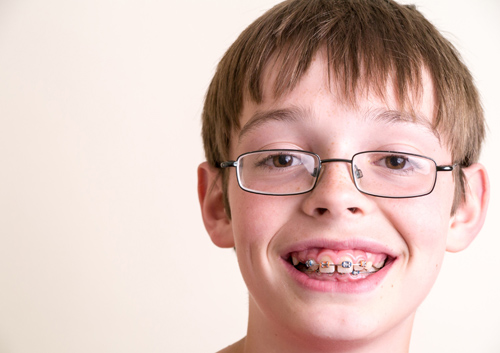
The average age of individuals who get braces is between nine and 14, although it is appropriate for younger children to visit Robert H. Perry Specialist in Orthodontics for a consultation with Dr. Perry. While parents may be concerned about the efficacy of early orthodontics, research suggests that early intervention can prevent greater dental health problems later in life.
What types of conditions require early intervention?
According to the American Association of Orthodontists, 3.7 million children under the age of 17 receive orthodontic treatment each year. Early intervention may be appropriate for younger children with crooked teeth, jaw misalignment, and other common issues. Early orthodontic treatment may be of use for several types of problems:
- Class I malocclusion. This condition is very common. It features crooked teeth or those that protrude at abnormal angles. In general, early treatment for Class I malocclusion occurs in two phases, each two years long.
- Class III malocclusion. Known as an underbite, in which the lower jaw is too big or the upper jaw too small, Class III malocclusion requires early intervention. Because treatment involves changing growth patterns, starting as early as age seven is a smart choice for this dental problem.
- Crossbite. Crossbite occurs when the upper and lower jaws are not properly aligned. An orthodontic device called a palatal expander widens the upper jaw, allowing teeth to align properly. Research suggests that early treatment may be beneficial in crossbite cases, especially when the jaw must shift laterally to correct the problem.
- Tooth extraction. That mouthful of crooked baby teeth can cause problems when your child’s permanent teeth erupt. For kids with especially full mouths, extracting baby teeth and even permanent premolars can help adult teeth grow in straight.
Considerations when thinking about early intervention
Early intervention isn’t helpful for all conditions. For example, research suggests that there is little benefit to early orthodontics for Class II malocclusion (commonly known as an overbite). Instead, your child should wait until adolescence to begin treatment. Scheduling a visit to our Corinth, MS office when your child is around age seven is a smart way to create an individualized treatment plan that addresses unique orthodontic needs.
March 14th, 2019

“St. Patrick's Day is an enchanted time -- a day to begin transforming winter's dreams into summer's magic.” Adrienne Cook
Lucky green shamrocks, leprechauns, and pots of gold – it must be St. Patrick’s Day! If you’re not Irish, how do you go about celebrating St. Patrick’s Day? It’s easy: You just put on one of those tall leprechauns hats, dress in green from head to toe, and wear one of those carefree pins that say “Kiss Me, I’m Irish”. On St. Patrick’s Day, everyone is Irish, and that is the universal beauty of the holiday. Celtic pride does not discriminate.
Wondering what our team at Robert H. Perry Specialist in Orthodontics is doing to celebrate March 17th? Well, we’ve thought about doing everything from handing out lucky gold coins (you know, the fake ones that are made of chocolate) to shamrock stickers. Maybe we’ll even give away green toothbrushes and floss! You’ll never know unless you come in to see Dr. Perry !
All kidding aside, St. Patrick’s Day is an important cultural and religious holiday. There are lavish parades and church services across Ireland on March 17th. Over time, however, the holiday has developed into a day to observe Irish culture in general. In places like England and the United States, where there is a large Irish Diaspora, the holiday has greater significance than other countries. From the streets of Boston to St. Patrick’s Cathedral in New York, it is a day of celebration, and many Americans of Irish descent will cook up a traditional meal of corned beef and cabbage.
So, to all of you with Irish ancestry, and to all of you who have decided to be Irish for the day, our office wishes you a Happy St. Patrick’s Day. Good luck looking for a pot of leprechaun gold, which is said to exist at the end of the rainbow. However, keep away from those sugary Lucky Charms; sweet cereals might taste good, but your kids’ teeth might not be feeling too lucky if they eat it for breakfast every day. Have a great St. Paddy’s Day!