
Our Blog

What is orthognathic surgery?

February 23rd, 2022
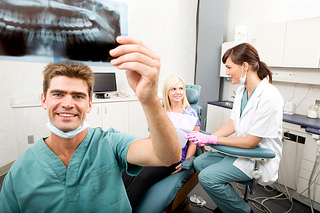
Orthognathic surgery is surgery to correct a wide variety of abnormalities of our patients' jaw and teeth. The surgery is often done in conjunction with orthodontic treatment. While the patient’s appearance may be significantly improved as a result, the primary purpose of the surgery is to correct functional problems including but not limited to:

  • Unbalanced facial appearance
  • Protruding jaw
  • Open bite (upper and lower teeth don’t overlap properly
  • Excessive wearing down of the teeth
  • Difficulty with chewing or biting
  • Chronic mouth breathing
  • Sleeping problems such as sleep apnea
  • TMJ pain (jaw joint pain)
  • Restoring facial injuries

Knowing when to start the orthodontic treatment in preparation for orthognathic surgery can also be tricky if our team at Robert H. Perry Specialist in Orthodontics is treating a teenager. It is important to know when to get started. If orthodontic treatment is initiated too soon and the teenager is still growing, the patient will either need to hold in braces until his or her growth is complete and they are ready for surgery or the braces will have to be removed and then placed again when growth is complete. Neither of these options is attractive since it requires longer time in treatment, which is something all our patients want to avoid. Our team at Robert H. Perry Specialist in Orthodontics strives to get all patients finished with treatment as quickly as possible because it is healthier for the teeth and gums and gives them a beautiful smile to enjoy for a lifetime.

If you are considering orthognathic surgery or you have been told that you need jaw surgery, give us a call to schedule your initial consultation today. Dr. Perry and our team at Robert H. Perry Specialist in Orthodontics will explain our treatment plan in a way you will understand and we will keep you informed every step of the way.


TMD Problems and How You Can Prevent Them

February 16th, 2022

Temporomandibular joint disorders (TMD) describe a set of conditions that involve trouble with your jaw and face muscles. They result from a problem in the temporomandibular joint (TMJ), which is a hinge that connects the temporal bones, in your skull in front of each ear, to your jaw. The joint enables you to talk, yawn, and chew by letting your mouth move.

TMD can be very painful and interfere with functions such as eating and speaking. This what to watch for and how to try to prevent TMD.

Risk Factors for TMD

You are at higher risk for TMD if you are a women than if you are male. The disorder is most common among adults between the ages of 20 and 40 years. Other risk factors for TMJ disorders include the following.

  • Arthritis in the area, making movement more difficult
  • Excessive tooth grinding, because it increases stress on the joint
  • General stress, which can lead you to clench your teeth and strain facial muscles

Symptoms of TMD

Symptoms of TMD can last for just a short while, or for several years. Seeing Dr. Perry is important if your symptoms make it impossible for you to eat regularly or if you have unbearable pain or discomfort. The following symptoms can occur on both or one side of your face.

  • Aching or very tired facial muscles
  • Jaws that are fixed open or shut without you being able to unlock them
  • Grating or popping sounds when you chew or close or open your mouth
  • Pain in the entire area, including the mouth, jaw, neck, or shoulders, that comes on when you chew or yawn

Preventing TMD

You can try to prevent TMD by focusing on reducing risk factors. If you grind your teeth at night, ask Dr. Perry about wearing a mouthguard. If you are overly stressed, look into ways to better manage your stress and relax your muscles. Another strategy for trying to prevent the development of TMD is to avoid chewing gum, since that puts stress on your jaw.

If you have questions about TMD, don’t hesitate to contact our Corinth, MS office.

Does Your Valentine Wear Braces?

February 9th, 2022

The Valentine shopping list is traditional and simple: Flowers. Candy. But if your Valentine is in braces this year, suddenly your choices become more complicated. No need to worry! Dr. Perry and our Corinth, MS team have some sweet suggestions that are both braces-friendly and Valentine-approved.

First, let’s look at some options where Cupid’s arrow has missed the mark.

  • Caramels—these sticky treats are difficult to clean from orthodontic work, and sticky, chewy foods can even cause damage to wires and brackets.
  • Chocolate covered nuts—hard foods such as nuts can break or bend wires and brackets.
  • Assorted chocolates—a confectionary minefield! There are bound to be some caramels and nuts in there somewhere, hiding beneath an innocent coat of chocolate, just waiting to ruin your Valentine’s evening.
  • Other candies such as taffy, licorice, hard candy? No, no, and no. Remember, anything sticky, chewy, or hard is on the “Loves Me Not” list.

So, which chocolate treats won’t break hearts or braces?

  • Soft truffles—if it’s not Valentine’s Day without a be-ribboned box of chocolates, choose soft truffles to fill it.
  • Chocolate mousse—the perfect end to a romantic dinner.
  • Chocolate covered strawberries—it’s a special occasion treat that won’t mistreat braces.
  • Rich chocolate cake—always a delightful indulgence, and even better if it’s in the shape of a heart.

If your Valentine is not a chocolate fan, there are other sweet treats that are delicious alternatives.

  • Cheesecake can be topped with (pitted!) cherries to celebrate in holiday-appropriate color.
  • Soft heart-shaped cookies will be even more romantic with decorative icing—add your initials for a personal touch.
  • Select an array of frozen yogurt, ice cream, or gelato in different shades of pink.
  • Macarons also come in a variety of pink and red shades—but make sure this confection is on your Valentine’s braces-friendly list!

Of course, you can celebrate the day without sugary tributes. A single flower, watching your favorite movie together or, best of all, a heartfelt card or letter are all wonderful ways to show you care. But if it’s just not the same holiday without a sweet treat, try some of our suggestions. Your Valentine will appreciate your thoughtfulness.

Just Add Water

February 2nd, 2022

One of the many benefits of your clear aligners is that you can remove them to eat. You should brush after every meal, just like you would with traditional braces, but cleaning your teeth is much easier without having to work around and between brackets and wires.

But when you wear your aligners 22 hours a day, you might be tempted to leave them in when you’re just having a sip of something when you’re thirsty. Unless you’re drinking water, please don’t.

What’s the problem with a can of cola or a cup of coffee?

  • Staining

The virtue of your clear aligners is that they are, well, clear! Probably one of the reasons you decided on this method of treatment was because you liked the idea of an inconspicuous appliance.  Unfortunately, dark beverages such as colas, coffee, tea, and red wine can stain your aligner, making it more visible.

  • Warping

Very hot beverages might actually affect the shape of your aligners. Since they are formed using heat, it makes sense that heat can also de-form them. If hot teas and coffee drinks cause a change in the shape of your aligners, they will not move your teeth the way they were meant to.

  • Affecting Tooth Health

Even though our enamel is very strong, sugary and acidic drinks can damage it. Acidic foods can erode enamel, and the sugars in our diet provide food for cavity-causing bacteria, which then produce acids that erode enamel.

Normally, saliva provides some protection from acids and sugars by diluting them and washing them away from the teeth. When you drink a cola or an orange juice with your aligners on, some of the liquid will get in them, and can stay in them until the aligners are removed. You will actually give these problem beverages the opportunity to bathe your teeth in sugar and acid over a longer period of time, without exposure to saliva to help offset potential harm. And after all your work to create a beautiful smile, you certainly don’t want new cavities!

How to protect your aligners and keep them their cleanest—and most invisible?

  • Take your aligners out before drinking beverages that can stain them, or, if you can’t, try using a straw. Clean your aligners according to Dr. Perry and our team’s instructions to keep them as clear as possible.
  • Don’t drink very hot beverages with your aligners in place. Try icing your coffee and tea if you can’t remove your aligners. And if you think your aligners have changed shape, please give us a call.
  • Drink water! Water hydrates you, doesn’t damage enamel, and keeps your aligners clean. Tap water is your best option, as even bottled waters can be acidic.

If your aligners should become stained, remember that you change them frequently, so the staining can be a temporary problem. If you do have a drink of something hot and your aligners feel “off,” give our Corinth, MS office a call. We’ll let you know if you need to replace them.

But prevention is always best! Avoid staining from the start by removing your aligners before you drink dark beverages. Don’t expose your aligners to heat. Think about replacing unhealthy drinks with water. And certainly brush right away, or rinse with water if that’s not possible, if you drink a sugary or acidic beverage. These simple precautions will help keep your aligners, and, most important, your teeth, looking their best.